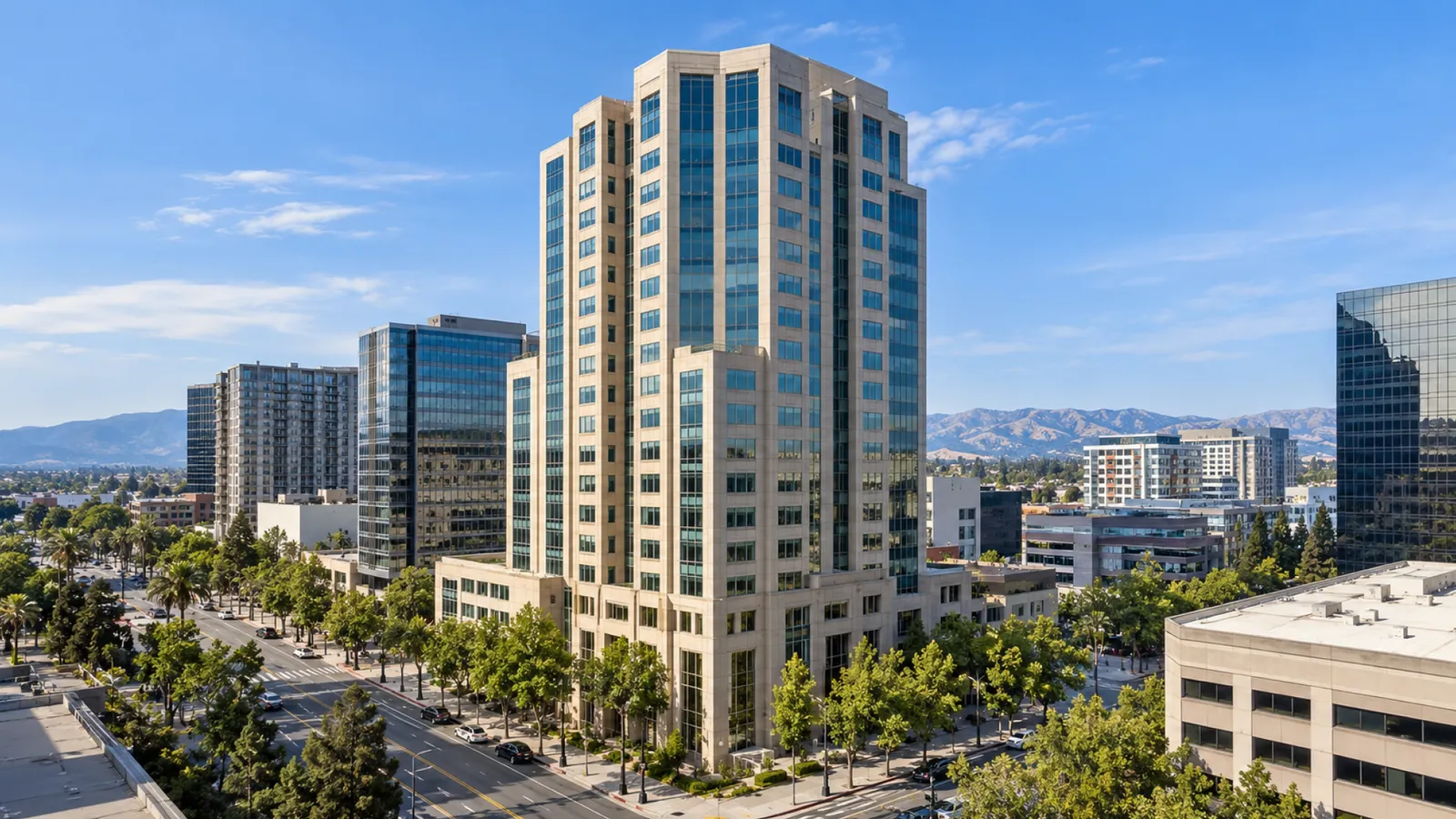
Our office is at 333 West San Carlos Street, on the sixth floor, a few blocks from Diridon Station and the SAP Center. I mention the address first because it’s the whole point of this post: most of what goes wrong in software projects goes wrong in the communication, and being in the same city as the people building your product removes more of that risk than any clause in a contract.
That’s a claim worth defending rather than asserting, so let me walk through what a local team actually changes, who nearby we’ve worked with, and how I’d evaluate a San Jose software development company if I were on the other side of the table.
The cost that isn’t on the spreadsheet
Offshore rates look good in a comparison table. The costs that sink schedules never appear there: the eight-hour offset that turns a five-minute question into tomorrow’s answer, the requirement explained three times to three people, the misunderstanding that surfaces at demo day when it’s expensive to fix. We wrote up the full comparison, including when offshore is the right call, in our honest look at offshore versus US development. The short version: the hourly rate is the smallest number on the invoice.
Being local doesn’t erase those costs. It shrinks the ones that come from distance, which turns out to be most of them.
What local actually changes
Same-day decisions. A question asked at ten in the morning gets answered at quarter past, not the next morning in another time zone. Over a twelve-week build that’s dozens of days recovered.
Whiteboard sessions that actually happen. Architecture and scoping work better in a room. We host them at the office or come to yours anywhere in Santa Clara County — and the first one is free.
Engineers who understand your market. We’ve built for Bay Area manufacturers, retailers, healthcare groups and venture-backed startups. Local context shortens discovery; you spend less time explaining your world and more time deciding what to build in it.
Accountability you can find. A Delaware entity with a mailbox is hard to hold to anything. A company with an office you can walk into isn’t. Our contracts sit under California law and our name is on the door.
Senior people on the call, every time. The engineer who scopes your work is the engineer who ships it, and you can meet them. There’s no handoff from the people who sold the project to the people who build it.
Who nearby we’ve built for
Proof beats promises, so a few local examples.
NanaWall, the moving-glass-wall manufacturer that has been making premium systems for forty years with more than twenty showrooms across North America, works with us on its sales team’s next-generation tools: an iPad application to configure, showcase and track projects, and the client web app where customers follow their own.
Good2Go, a San Francisco startup with more than ten issued patents for keyless, touchless access to restrooms and secured retail spaces, had us lead core platform development and the migration to AWS and Azure that opened broader distribution — then kept us on for operations and growth features.
FlashGrid, a Sunnyvale database-infrastructure company that placed 73rd on the Financial Times’ list of the Americas’ fastest-growing companies, has had us build and maintain its corporate website and rebuild its help center on Zendesk since launch.
And Maze, the user-research platform used by more than sixty thousand teams, needed its AI-interview front end rebuilt to a launch date set before we arrived. One of our senior engineers did it inside their monorepo in three weeks.
What companies here actually bring us
The work that comes through the door in San Jose falls into a few recognizable shapes, and it’s worth naming them so you can tell whether yours fits.
Manufacturers and distributors in the South Bay bring internal tools, ERPs and sales systems that have outgrown spreadsheets and need AI in the loop rather than bolted on. Consumer and hardware startups bring mobile and web products that have to talk to a device, a payment provider or a fleet of them. Product companies with users already bring the AI feature that has to be accurate to be worth shipping, and the platform work nobody on the team has time for. Founders bring prototypes built in Lovable, Bolt or a hundred chat windows that worked for the demo and buckled under the first real customers; those we bring under one plan and take to production. And companies without a technical leader yet bring the question of what to build at all, which is where our CTO and senior architects earn their keep before any engineer is assigned.
If you’re near Diridon, the first conversation is a whiteboard session at the office. Bring whatever you have — a deck, a prototype, a spreadsheet that has become the product — and we’ll map it onto the plan in the room. Caltrain from Diridon puts Palo Alto, Mountain View and San Francisco a train ride away, so we come to you just as often.
How we build — and why it matters more locally
Being close to your team is worth most when the build itself moves fast enough for closeness to matter. Ours does. Discovery takes a few days to two weeks. Within the first weeks you click through a whole flow of your product as real screens with real content, in the order your users will meet them — and anything nobody has decided yet is marked on the screen, so it becomes a decision in week one rather than a surprise in month five. Working software follows soon after.
Underneath that, senior engineers decide what to build and how; more than 100 AI agents per engineer do the building around the clock, inside a plan with a check on every save; and before release a person watches each key task work on the real product and signs off. Every decision that matters is made by a person and stays on record. When you can drop by the office for that sign-off session, the whole loop gets shorter still. The full method is described on how we build.
How to evaluate a San Jose software development company
If I were hiring rather than selling, these are the questions I’d ask any local firm, including us.
Who exactly will write my code, and can I meet them before signing? Where is your office, and when can I come by? What does your discovery produce, and can I take it to another team if I choose to? How do you handle a requirement that changes mid-project — and what does it cost me? Show me the sign-off record from your last release. And the one that separates firms fastest: tell me about a project where you told the client not to build something.
A local firm that answers all six specifically is worth the premium over one that doesn’t, whatever the hourly rate says.
My honest take
A local team isn’t a virtue on its own. It’s a multiplier on a team that’s already senior, already fast, and already accountable. If the firm down the street sends juniors and hides behind a project manager, distance was never your problem. But when the people in the room are the people doing the work, being in the same city compounds everything — decisions, trust, and speed.
A personal aside: our best scoping sessions still happen at the whiteboard on the sixth floor with the door open and someone’s coffee going cold. Some things AI agents can’t do yet.
Diffco US Inc. is at 333 W San Carlos St, Suite 600, San Jose, CA 95110 — reach us at +1 (415) 655-1002 or [email protected]. If you’d rather start with the problem than the tour, book a free architecture review and we’ll hold it at our office, at yours, or over a call, whichever suits you.