
You have a vision
but no architecture
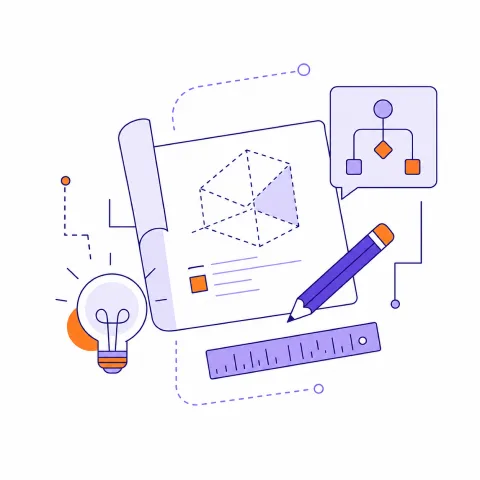
Leadership has agreed AI matters. Engineering can’t quote a timeline because failure modes, eval criteria, and cost-per-request are unknown. Discovery turns the vision into a buildable spec.
 Diffco Services
Two weeks to answer “should we build this, and what will it actually cost to run?” before you spend six months and a budget finding out. Run by senior AI engineers. Accelerated by the same AI tools we use to ship in production.
 2-week sprint
 You own all deliverables
 NDA from day one
 Direct CTO access
Is this you?
Leadership has agreed AI matters. Engineering can’t quote a timeline because failure modes, eval criteria, and cost-per-request are unknown. Discovery turns the vision into a buildable spec.
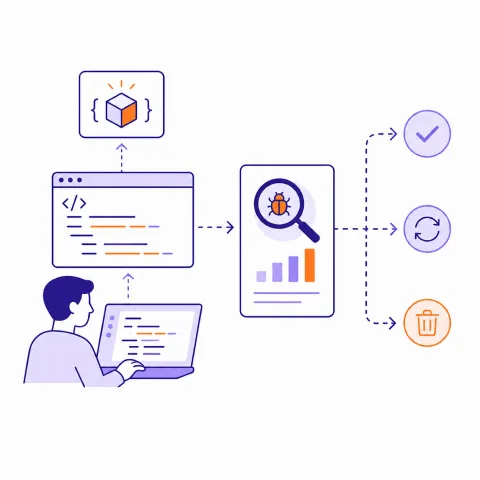
A vibecoded demo or notebook that works in the room and falls apart everywhere else. We find out why, and tell you honestly whether to harden, restart, or shelve it.
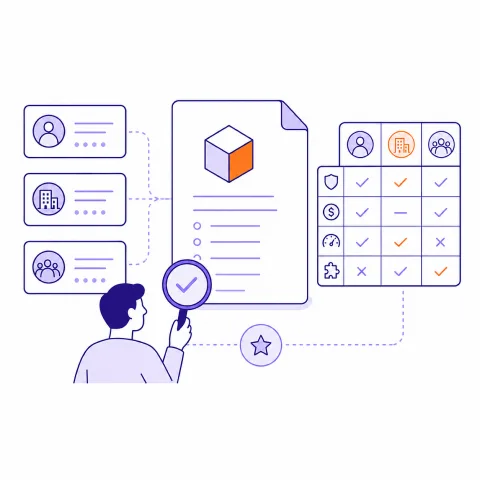
You need an independent technical view before handing a six-figure budget to an agency. Discovery produces a brief that lets you compare proposals, including ours, on substance, not slide decks.
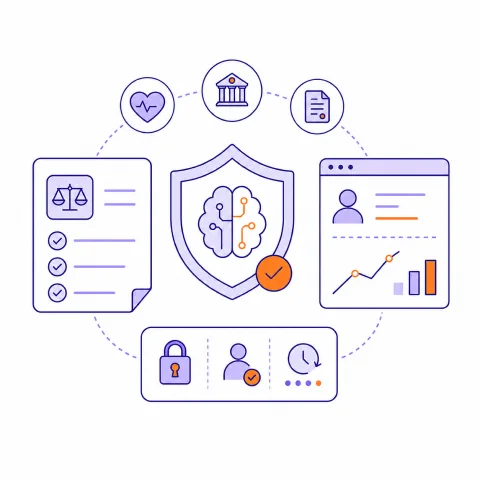
Healthcare, fintech, legal: anywhere a wrong AI output has real downside. Discovery includes policy gates, audit logging, and human-in-the-loop design before a single line of production code ships.
What you get
Real inputs paired with reference outputs and assertions: easy cases, edge cases, adversarial inputs. The spec your AI must meet, reusable across model swaps and vendor changes.
A working diagram of the simplest viable design: data flow, tool inventory, failure modes, and written rationale for every non-obvious choice. Multi-agent only where the eval demands it.
The real dollar cost at 1x, 10x, and 100x your projected traffic, with token math, caching, routing, and the levers to pull when the bill grows. The run cost you’ll live with, not just the build cost.
An engineer-month estimate broken down by component, with every assumption stated. Likely (P50) and worst-case (P90) timelines, and a clear view of where the risk lives.
A written recommendation to build, shelve, or restart, in three paragraphs your board can read in five minutes. We’ve recommended “don’t build this” before, and we’ll do it again if the numbers say so.
For regulated workloads: data residency, audit logging design, fairness and drift checks, and the policy gates that need deterministic code, not prompts. Drafted to hold up under examination.

Diffco AI Methodology
Code is the cheap part now. Knowing what to build first, which foundation will hold at ten times the users, and what not to build at all is where projects are won.
Senior engineers make those calls. More than 100 AI agents per engineer do the building, around the clock, on our own delivery platform built on Claude Code and OpenAI Codex. A living plan with automatic checks keeps every agent inside the lines.


Tech stack
 OpenAI
 LangChain
 Helicone
 Promptfoo
 Ragas
Ragas AnthropicOpenAI
 Gemini
 Hugging Face
 Mistral
 Qwen
Qwen Grok
Grok Kimi AI
 TypeSafe AI
 Open weight modelsLangChain
 LlamaIndex
 MCP
MCP Function Calling
 Pinecone
 Weaviate
 pgvector
 Qdrant
 Claude Code
 Cursor
 Internal prompt-management
 automated competitive scanning
How we build
Every project runs through Production-Ready AI Engineering: seven stages, senior engineers directing 100+ AI agents, a check on every save, and a person signing off at every gate.
Workshops and stakeholder interviews with AI in the room. It cross-verifies inputs across calls, docs, and Slack threads, flagging blind spots, edge cases, and contradictions humans miss.
AI decomposes the work, picks architecture, models, and tools. Surfaces risks, costs, trade-offs, and conflicts between stated requirements, before they become bugs.
You review and approve. Every decision is logged: an auditable trail before any code is written. No black box, no scope drift.
AI agents execute the approved plan inside engineered guardrails. Senior engineers steer and unblock. Sprint cadence with working artifacts, not status decks.
Three independent layers on every release candidate: automated evals, senior code review, and dedicated Human QA, with manual and exploratory testing alongside security, performance, and accessibility checks.
Production deployment, UAT, knowledge transfer, runbooks. Cutover is documented, reversible, and on a schedule you approve. Your team takes the keys, or we operate it for you.
Launch is a milestone, not a finish line. Monitoring, feedback loops, and incremental improvements keep the system compounding, and feed the next discovery cycle.
Every later change re-enters the same loop, and nothing skips a step.
Read the full methodology
Two weeks, fixed scope, quoted after a free 30-minute scoping call. You own all deliverables, with no exclusivity clause and no rights retained on our side. Use the plan with us, with another team, or in-house.

A phased contract protects both sides. We confirm the project is worth building; you confirm we’re the right partner. If Discovery green-lights the build, we move straight into Dedicated Team or Agent-Led Delivery, from a much stronger starting point.
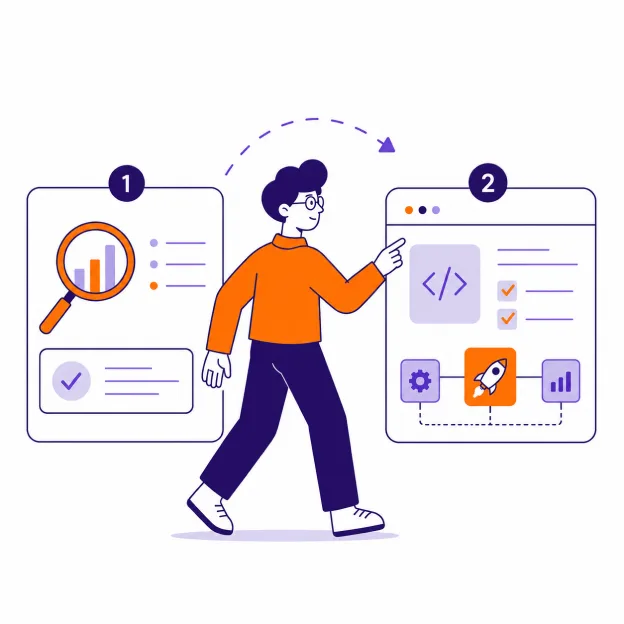
Senior experts on every project: AI/ML and software engineers, product and UX designers, and project and product managers. Assigned to you, never reassigned mid-project.

Agile delivery on Production-Ready AI Engineering, from early PoC to production rollout. Clear gates, your sign-off at each one, so you always know what’s happening and why.

You always know:

Every agent action is logged and every decision is traceable. SOC 2-aligned practices, HIPAA- and GDPR-aware delivery, and full IP assignment.
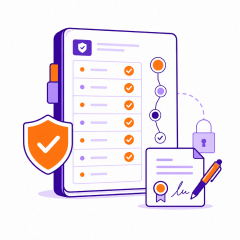
From the first workshop to post-launch optimization, you get:

Knowledge transfer, runbooks, and documented, reversible cutovers if your team takes the keys. Ongoing support, monitoring, and improvements if you’d rather we operate it.
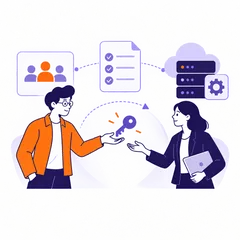
Most AI agencies skip Discovery and go straight to a build quote. Here’s why we don’t.
The single best predictor of whether an AI build ships is whether the team built the eval set before the prompt. The eval is the spec; the prompt is the implementation. Sequencing matters.
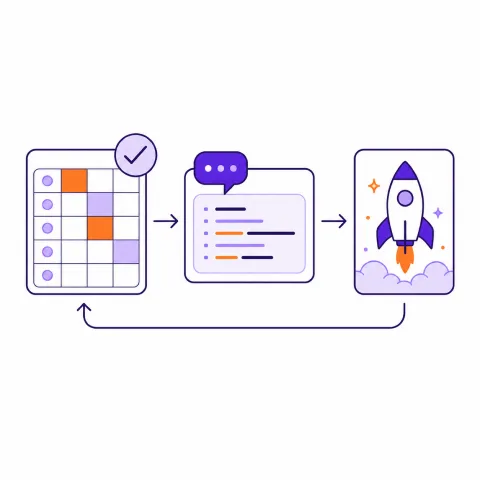
Build cost is a one-time number. Per-request cost is what you live with for years. Discovery puts a defensible number on it before anyone signs a build SOW.
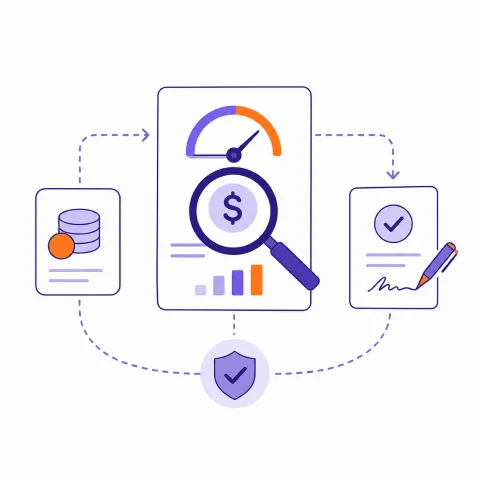
Some AI ideas fail their own eval set or collapse once cost at scale is modeled. We’d rather tell you in week two, not after launch. Roughly 1 in 8 engagements ends in a no-build call.
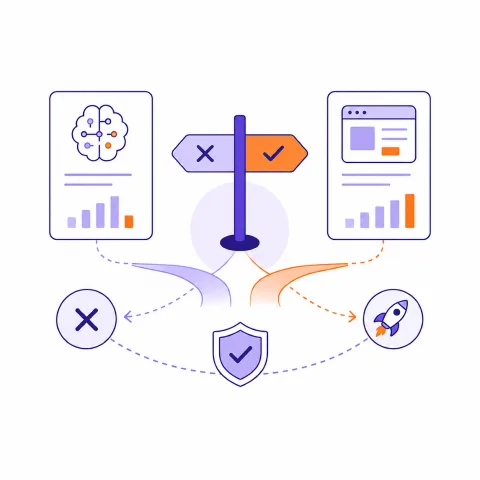
Discovery ends with a decision, not a commitment. If the numbers don’t work or we’re not the right fit, either side walks away, and you keep every deliverable. No strings attached.




Explore our
amazing case studies

Two weeks of calendar time, fixed scope. Fee depends on the complexity of the domain (regulated workloads cost more than greenfield consumer features) and the size of the input corpus. Quoted after a free 30-minute scoping call.
You do, in full. Eval set, architecture, cost model, go/no-go memo: all yours. No exclusivity clause, no lock-in. If you take the deliverables to another build partner, that’s a perfectly fine outcome.
We say so, in writing, with the reasoning. Roughly 1 in 8 Discovery engagements ends in a no-build recommendation. The fee is paid either way, and in our view, it’s the cheapest possible insurance against committing six months and a budget to the wrong thing.
Yes, that’s the most common path. If Discovery green-lights the build and you continue with us, we move directly into production engineering with the architecture, eval harness, and cost model already defined.
Access to enough real data (anonymized as needed) to build a meaningful eval set. One or two hours per week with the stakeholders who own the problem. Decision authority on the team, so the deliverables don’t sit in a queue. From our side, Diffco’s C-level and VP-level team is available throughout, including for product strategy sessions, not just technical reviews.
A typical agency discovery is unpaid, two days long, and produces a Figma mockup and a price. It’s a sales process disguised as engineering. Ours is a paid, two-week engagement that produces falsifiable artifacts: an eval set, a tested architecture, a real cost model. The point isn’t to win your build contract; the point is to be right about what to build.
Even better. The prototype shortens the timeline because we can run the eval set against it directly. We’ve taken Lovable, Bolt, v0, Cursor, and Claude Code prototypes into Discovery and produced clear hardening or rebuild recommendations. See our Vibecode Rescue playbook for the typical pattern.
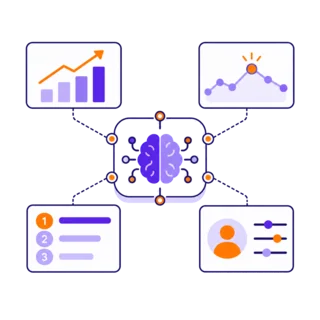 AI & ML DevelopmentML, RAG, computer vision, and copilots, engineered to production standards with Production-Ready AI Engineering.
 Team AugmentationSenior engineers who join your team, fit your workflow and culture, and start shipping from week one.
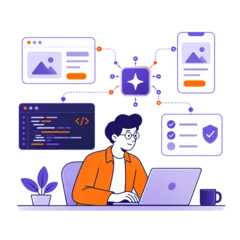 Custom Software DevelopmentWeb apps, platforms, and internal tools, built in weeks instead of months, from PoC to production.
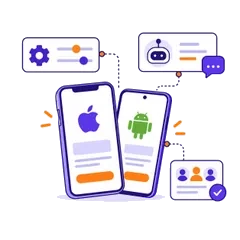 Mobile DevelopmentNative iOS and Android apps, with AI features built in, designed for real users from the first release.
 Web DevelopmentModern websites and web apps engineered by senior teams directing AI agents.
333 W San Carlos St Suite 600, San Jose, CA, USA, 95110