

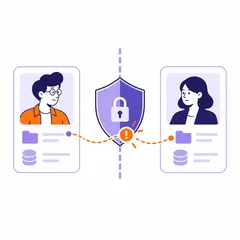
Users can see each other’s data
Security rules missing or misconfigured, admin keys shipped to the browser. One wrong request and a customer sees someone else’s account.
We take Lovable, Bolt, Replit, Cursor, and Claude builds to production. We keep what’s good, fix what breaks, and tell you honestly whether to rescue or rebuild.
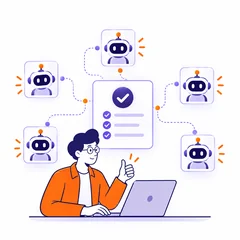
Senior engineers in Silicon Valley, directing 100+ AI agents each — the same kind of tooling that built your app, this time inside a plan with automatic checks on every change and a person signing off.
Products we developed are used by






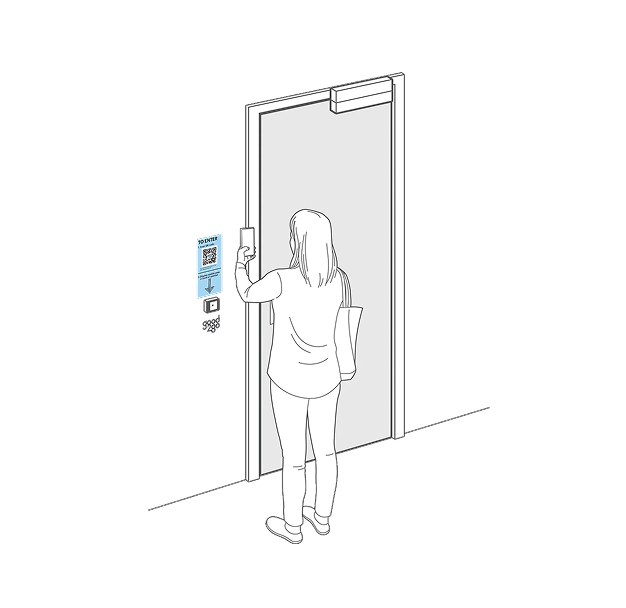
Their commitment to excellence ensures our platform remains robust and adaptable to our evolving needs. With their expertise, we've successfully enhanced our offerings, making our collaboration highly effective.

 Pete GualfettiHead of Design and Integration at Good2Go
We were impressed by Diffco's approach to the development process and how they engineer new solutions. They look ahead, learn about your product and strategy, and develop sophisticated, highly functional solutions.

 Stas TushinskiyCEO & Co-founder at Instreamatic
Diffco supplied us with the skilled engineers we needed to meet our ambitious goals. Their account manager proactively addressed concerns, ensuring our expectations were met.

 Razvan SpatariuSenior Software Engineering Manager at Multiverse
Diffco took on a complex financial system build for us — the kind of work that touches fund accounting and compliance, where there’s no margin for error — and they delivered. They helped us shape our AI product strategy rather than just executing tickets. Real ownership of the outcome.
 Adam HooksCEO at Vero K12
Diffco handled discovery for two complex health tech AI products for us. They’re technically sharp, honest about what’s actually worth building, and easy to work with. They moved fast without cutting corners and understood the healthcare space. Highly recommend.
 Mark MagazuPrincipal at M3 Veterinary Innovation Advisors
Diffco's expertise and engineering approach increase the reliability and efficiency of our IoT infrastructure. Diffco has proven to be a reliable partner with exceptional expertise. I highly recommend their services.
 David C ThompsonSenior Digital Initiatives director at ChemTreat
The quality and consistency of the team make Diffco stand out from other vendors.
 Art DanielovCEO at Flashgrid
They were communicative, consultative, and helpful. They went above and beyond all the way. What an amazing team. I will work with them again and again.

 Don MarklandCEO at Accountability Now
Diffco turned our concept into a polished product from scratch, delivering on a tight timeline. Clear communication, organized project management, and a strong mix of creativity and technical expertise produced an app that exceeded our vision.
 Mason MeninCo-founder at WYA Group, Inc.
Where vibe-coded apps break
AI builders are great at making something that works for one user, on one happy path, on the founder’s laptop. The problems start when a second user logs in, a payment fails halfway, or someone tries to break it.
Security rules missing or misconfigured, admin keys shipped to the browser. One wrong request and a customer sees someone else’s account.
A user signs up by phone, comes back through Google, and now has two accounts. Nobody tested the second path.
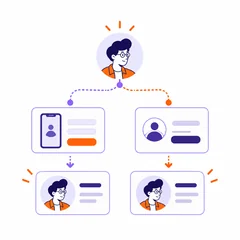
The charge completes at Stripe, but the app hangs. No retry safety, no refund path, and a price the browser can edit.

Tables added per feature, duplicated fields, no rules keeping data consistent. Every new feature costs more than the last.

No tests, no monitoring, no alerts. The only spec is the chat history, so every fix is another prompt, and you find out about the next bug from a customer.

Hosting limits, rate limits, and generated code no engineer can navigate without a map. You hit the wall right when you start to grow.

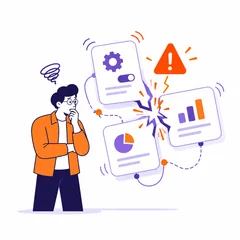
The symptom you’re probably seeing
Every fix breaks something else. You’re afraid to touch it.
That’s the moment to bring in engineers: before the next launch, not after.

Approaches
Not every vibe-coded app needs a rewrite. Most need one specific kind of help, and the free review tells you which.
Stop the bleeding without changing your stack. We fix the critical security and data bugs, add monitoring, and make releases predictable again.
Best for:Apps with users today and a launch or fundraise coming up
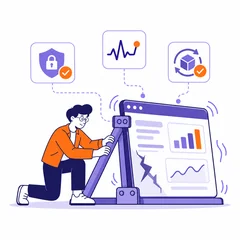
Keep what works, replace what’s fragile: secure logins and accounts, access rules that keep each user’s data their own, payments designed not to double-charge, and automated tests.
Best for:Apps with traction and a mostly sound foundation

We move your app from the builder’s hosting to a stack your team owns (Next.js, Supabase or Postgres, Vercel or AWS), keeping your product and your data intact.
Best for:Teams hitting platform limits, rising costs, or investor due diligence

Your prototype becomes the spec. Within days you click through the new version as real screens, before we commit. Then we rebuild on a solid foundation, reusing the flows and design that already work.
Best for:Apps whose data or security can’t be fixed in place

Once your app is production-ready, the same senior team keeps building what the builder couldn’t: integrations, roles and permissions, admin tools, and AI that works outside a demo.


How we build
Your builder gave you code with no record of why. So we start by reading everything: the app, the prompts and chat history behind it, and your notes. Our engineers turn that into the plan your product never had: what it’s for, the rules it must never break, and the decisions nobody made yet.
From then on, nothing changes without a check and a named person signing off. Your existing code stays as it is. New work follows the plan from day one, and older parts come under it as we touch them.


What you get
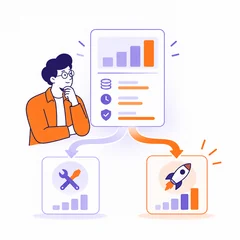
Every issue ranked by risk, with the fix and the effort next to it, plus a clear recommendation on which approach fits.

Logins, data, payments, and access control fixed at the root, with tests that fail if anyone breaks them again.

Monitoring, alerts, logs, and safe, repeatable releases. You’ll know about problems before your customers do.

One page shows what’s done, what’s waiting on you, and what needs a second look, with the reasoning behind each decision. It lives next to your code, belongs to you, and your next engineer or investor’s due-diligence team can read it too.

Why founders bring rescues to Diffco
No junior bench and no handoff. You talk to the people who will actually touch your code.

For Happier Meditation, a senior team reviewed the full codebase, architecture and critical workflows, documented what had lived only in people’s heads, and kept a 4.8★ app running through a major organizational transition.
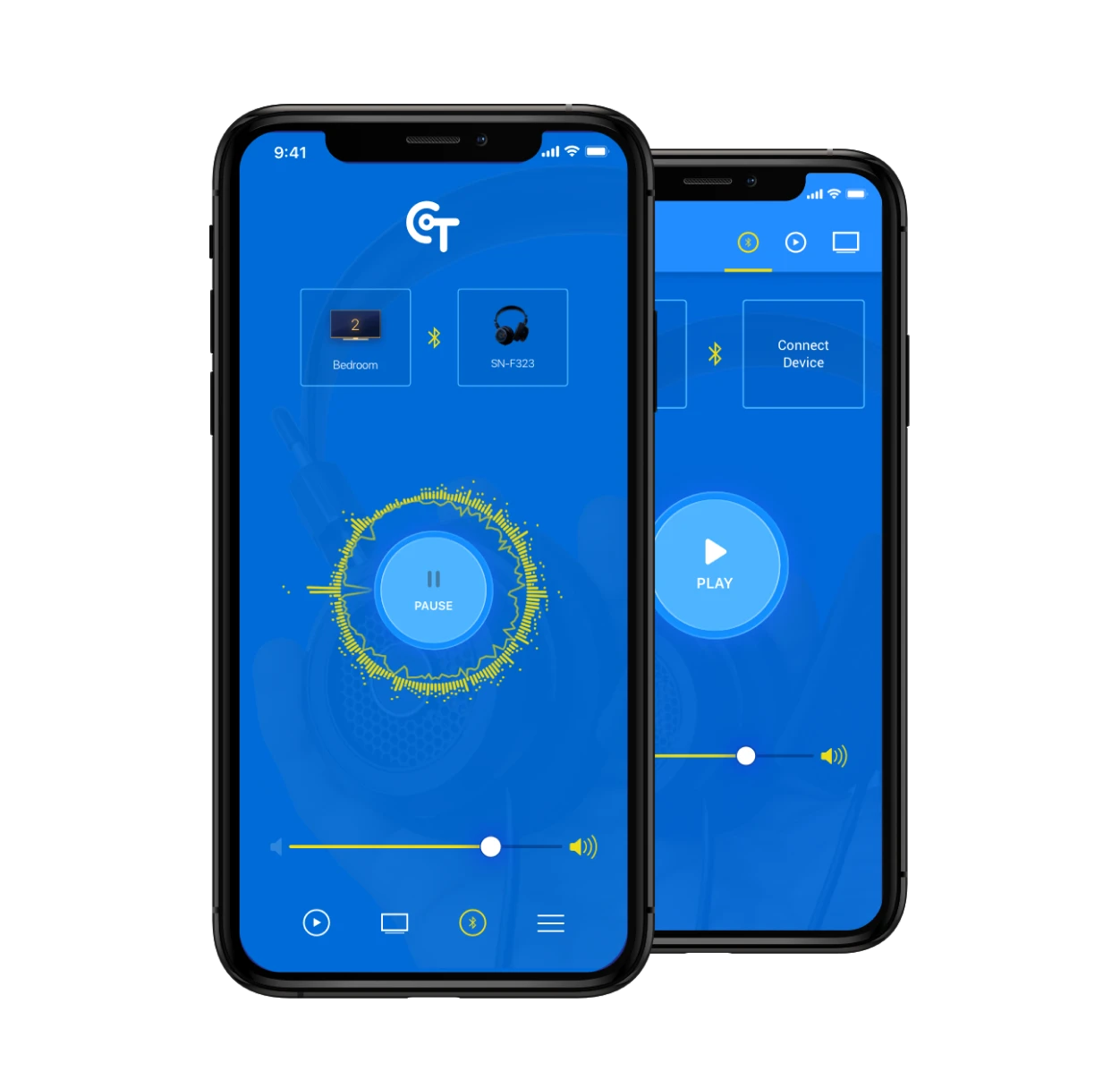
Clovitek’s audio task hadn’t been solved by other teams of specialists. We built the complete software stack: the firmware, the audio streaming protocol, and the iOS and Android apps.

A rescue that costs more than a rebuild isn’t a rescue. Your review says which, with numbers.
Lovable, Bolt, Replit, Cursor, v0, Base44: we know what each one does well and where each leaves gaps.

The builder was fast because nothing checked it. We’re fast because every change is checked against the plan, and a person still signs off before anything ships.

Platform audit · Continuous engineering

Happier Meditation runs native iOS and Android apps, Apple Watch and the web. A senior Diffco team reviewed the full codebase, architecture and critical workflows, and documented the environments, workflows and decision history that had previously lived in people’s heads. A flexible team of senior engineers then maintained and evolved every layer — back end, native mobile, web and infrastructure — with releases and app-store submissions handled end to end.

Two ways to start

A senior engineer — with agents reading the repo, the infrastructure, the data model and the chat history that produced it — delivers the plan your app never had: ranked findings, the rules it must never break, the recommended approach, and an estimate that shows its uncertainty as a range with the open questions that make it wide.
 Fixed price, agreed up frontOne week from repo access to planThe plan is yours in full — take it to any team, including your own
The same engineer leads the rescue with a Diffco team behind them: stabilize, harden, move off the builder or rebuild, in weekly increments you can see and use.
Monthly team allocation or fixed scope for well-defined rescuesOption to keep the team for what comes nextWhere we meet your build
 Lovable
 Bolt.new
 Replit
 Cursor
 v0
v0 Base44
 Windsurf
 Next.js
 React
React Supabase
 Postgres
 Node.js
 Python
 Vercel
 AWS
AWS Stripe
 Twilio
 Auth providers and SSO
 Evals for AI features
 GitHub Actions
 Playwright
 Sentry



Explore our
amazing case studies

No — not in most cases. If the frontend the builder produced is working, we usually keep it and replace the fragile parts underneath: authentication, database constraints and access control, payments, monitoring. Moving off the builder entirely is a separate decision, and the triage report says whether it’s worth it.
It depends on whether the app needs stabilizing, hardening or rebuilding, and triage gives you the timeline as a range with the open questions that make it wide. Triage itself takes one week from repo access. Urgent stabilization — a security hole, broken payments — starts inside the first days.
Triage is a fixed price, agreed up front. Rescues run on a monthly team allocation or a fixed scope once triage has defined the work. You’ll have the number before committing to anything beyond triage.
Only if that’s cheaper and safer than repairing — and we’ll show you the comparison. Rewrites happen when the data model or security posture can’t be fixed in place. Otherwise we keep what works.
Yes. Most rescues stay on the infrastructure you already have. We tighten configuration, add what’s missing (migrations, policies, monitoring), and only recommend moving when the platform is the problem.
Access control, identity linking, and payment edge cases. They share a cause: builders optimize the visible path and skip the invisible constraints. They’re also what investors’ technical due diligence tends to check first.
You do — the repo, the infrastructure accounts and the documentation are yours. We ask for access, not ownership, and we sign an NDA before reading anything.
Sometimes the honest answer is no: the prototype proved the idea and its job is done. Triage tells you that too, and the rebuild path reuses everything the prototype taught you. When it’s a close call, agents build both versions in hours and you decide on evidence rather than opinion.
By putting a plan beside it first. Every goal lists what the software must do, and every piece of new code names the part of the plan it fulfils — so when something changes, everything that depended on it is flagged the same day: what needs new work, what’s invalidated, and what looks untouched but needs a second look. You approve that picture, then agents build inside it with automatic checks on every change. That’s the difference between an app that absorbs change and one that quietly breaks somewhere else.
No. You make decisions and read one page that shows what’s finished, waiting on you, or needs a second look. The agents do the day-to-day writing; the plan is plain files that live with your code and belong to you.
 Claude Code DevelopmentOur AI delivery platform runs on Claude Code. We build with it, and we set your team up on it.
 React DevelopmentSenior React engineers build fast, accessible front ends: new products, takeovers and React 19 upgrades.
 Web DevelopmentModern websites and web apps engineered by senior teams directing AI agents.
 Custom Software DevelopmentWeb apps, platforms, and internal tools, built in weeks instead of months, from PoC to production.
 Team AugmentationSenior engineers who join your team, fit your workflow and culture, and start shipping from week one.
333 W San Carlos St Suite 600, San Jose, CA, USA, 95110