

A blocked event loop
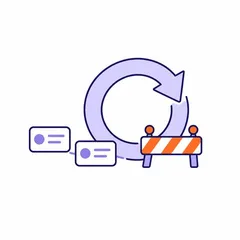
One huge JSON.parse or tight loop, and every request on the server waits. We alert on event-loop lag, stream big payloads and move CPU work to workers.
Your back end has to keep up: launch-day traffic, live features, the systems your business runs on and the AI on your roadmap. Diffco builds Node.js APIs and real-time services that do, in TypeScript from the API to the screen, and takes over the ones that have grown hard to change. Senior engineers set the architecture, AI agents build inside it, a person checks every key flow.
Senior engineers. Discovery in days, working software in weeks.
Products we developed are used by






Diffco's expertise and engineering approach increase the reliability and efficiency of our IoT infrastructure. Diffco has proven to be a reliable partner with exceptional expertise. I highly recommend their services.

 David C ThompsonSenior Digital Initiatives director at ChemTreat
Their commitment to excellence ensures our platform remains robust and adaptable to our evolving needs. With their expertise, we've successfully enhanced our offerings, making our collaboration highly effective.

 Pete GualfettiHead of Design and Integration at Good2Go
We were impressed by Diffco's approach to the development process and how they engineer new solutions. They look ahead, learn about your product and strategy, and develop sophisticated, highly functional solutions.

 Stas TushinskiyCEO & Co-founder at Instreamatic
Diffco supplied us with the skilled engineers we needed to meet our ambitious goals. Their account manager proactively addressed concerns, ensuring our expectations were met.
 Razvan SpatariuSenior Software Engineering Manager at Multiverse
Diffco took on a complex financial system build for us — the kind of work that touches fund accounting and compliance, where there’s no margin for error — and they delivered. They helped us shape our AI product strategy rather than just executing tickets. Real ownership of the outcome.
 Adam HooksCEO at Vero K12
Diffco handled discovery for two complex health tech AI products for us. They’re technically sharp, honest about what’s actually worth building, and easy to work with. They moved fast without cutting corners and understood the healthcare space. Highly recommend.
 Mark MagazuPrincipal at M3 Veterinary Innovation Advisors
The quality and consistency of the team make Diffco stand out from other vendors.
 Art DanielovCEO at Flashgrid
They were communicative, consultative, and helpful. They went above and beyond all the way. What an amazing team. I will work with them again and again.

 Don MarklandCEO at Accountability Now
Diffco turned our concept into a polished product from scratch, delivering on a tight timeline. Clear communication, organized project management, and a strong mix of creativity and technical expertise produced an app that exceeded our vision.
 Mason MeninCo-founder at WYA Group, Inc.
Where Node.js back ends break
These failures are predictable, and fixable. Most pass every test in staging and only show up under real traffic.
One huge JSON.parse or tight loop, and every request on the server waits. We alert on event-loop lag, stream big payloads and move CPU work to workers.
A rejected promise nobody handles, a webhook processed twice. We catch floating promises in the build and make every webhook safe to repeat.
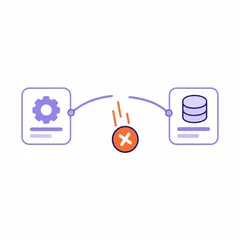
Hundreds of npm packages, some abandoned, and nobody knows what a bump breaks. We lock versions and let small, tested update PRs do the upgrading.
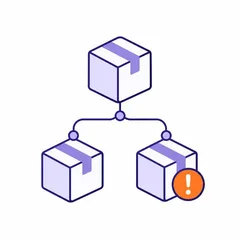
Node.js 20 stopped getting security patches in April 2026; 22 follows in April 2027. We move you to a current LTS in slices, with the service live.

Payment, CRM and partner APIs, each with its own limits and outages. We wrap each in an adapter with timeouts and a fallback, so one outage stays one outage.
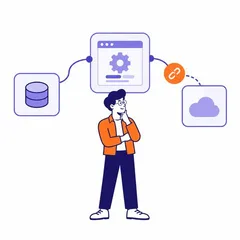
No types, no validation at the edges: a field renamed in one service breaks three others. We add types, schemas and contract tests in CI.

Why Node.js is still worth it
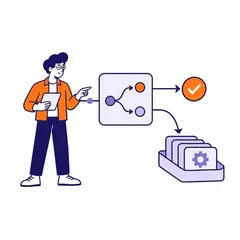
Node.js gives you one typed API behind your web and mobile apps. The failures above are fixable: on a new build we fix them before launch, on a takeover we fix them first.

Node.js development services
TypeScript APIs on NestJS, Fastify or Express, with auth and validation. One order type serves the API and web app; mobile gets a typed client from the same contract.
Best for:Products where several clients call one API.
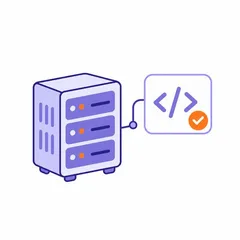
WebSockets, streams and queues for chat, live dashboards and device data. Non-blocking I/O holds thousands of connections, and a slow consumer doesn’t stall the rest.
Best for:Products where users watch data change as it happens.
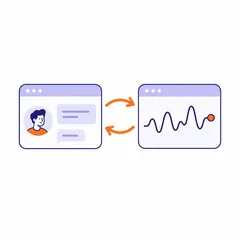
The layer between your product and Stripe, QuickBooks Online, partner APIs or your ERP: retries, idempotency, leader-elected polling and an alert when a feed degrades.
Best for:Operators whose business runs across several systems.

Node.js 20 and old Lambda runtimes to a current LTS, back on security patches. JavaScript to TypeScript, CommonJS to ES modules, Express to NestJS route by route.
Best for:Teams running a service they’re afraid to touch.

LLM calls, retrieval and agents in TypeScript, with streamed responses, rate limits, token cost logged per user, evals on real data and a fallback model.
Best for:Products adding accurate, affordable AI.

Choosing the runtime
 APIs, real-time, integrations and serverlessNon-blocking I/O on an event loopTypeScript end to end, with types shared with the front endnpm, the largest package registry; most-used web technology (Stack Overflow 2025)

How we build
Our own AI delivery platform puts your plan, API contracts and back-end rules in front of every agent: which data may leave which service, what must be idempotent, which packages are allowed. Then it checks everything the agents produce, on every change.
Senior engineers decide what to build and how; more than 100 AI agents per engineer build inside those rules around the clock. Before release, a person watches each key flow work end to end, from request to webhook to sync, and signs off against a standard agreed before the code existed. Ask for the same fix twice, and it becomes a rule every agent follows from then on.


What you get
OpenAPI or GraphQL schemas, validated input and shared TypeScript types, so a renamed field fails a build instead of a customer.

Idempotent writes, backoff and dead-letter queues, a timeout on every outbound call, and a build that fails on a floating promise.

Event-loop lag, p95, traces and logs on every service, with alerts that name the failing dependency, not a dashboard opened after the outage.

A current LTS, a committed lockfile, update PRs and a scan on every change, plus the plan and decision log in your repo, yours to keep.

Why teams choose Diffco for Node.js
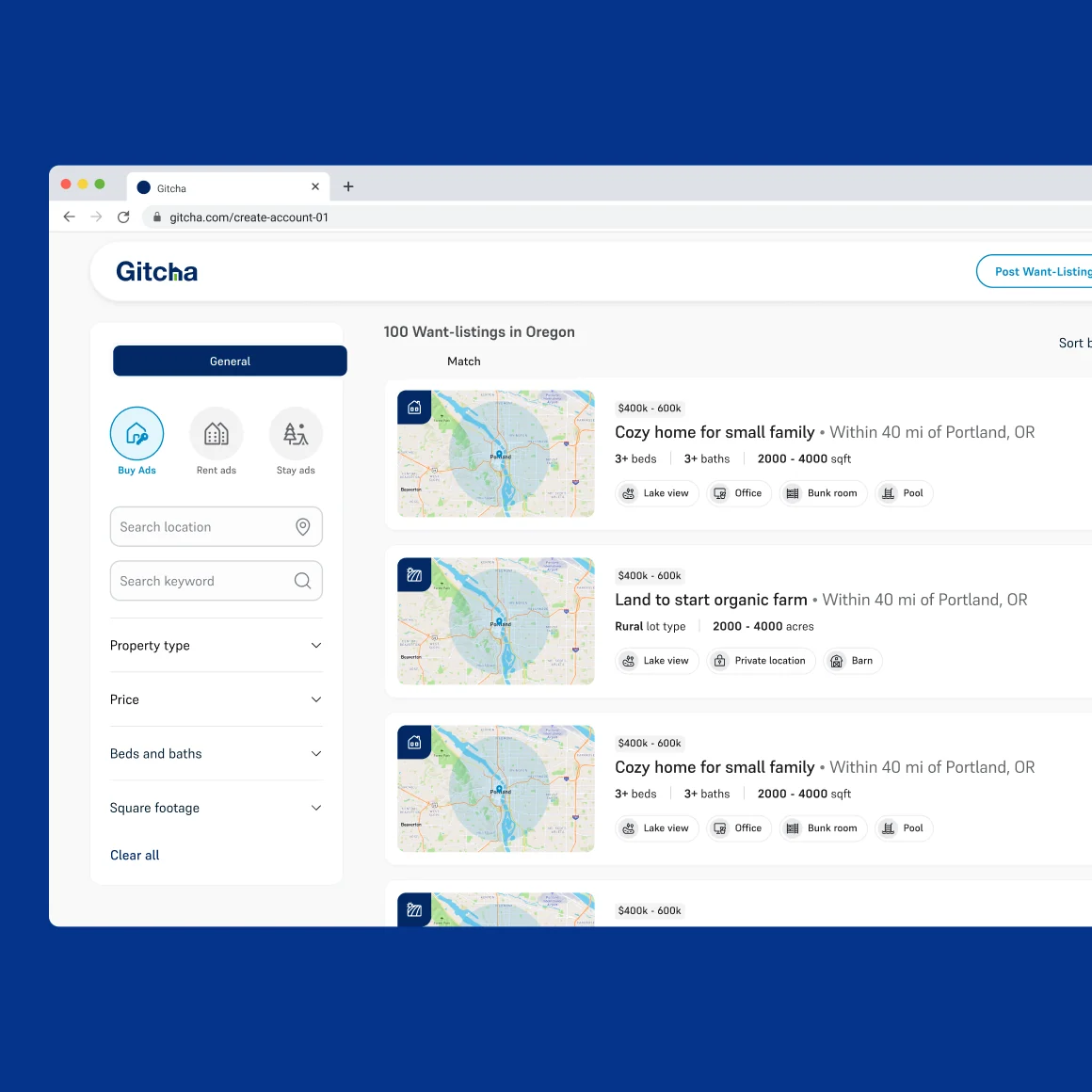
As Gitcha’s embedded team, we refactored key parts of its React and Node.js codebase, modernized its AWS setup and launched Version 2, “completed on time” per the client.

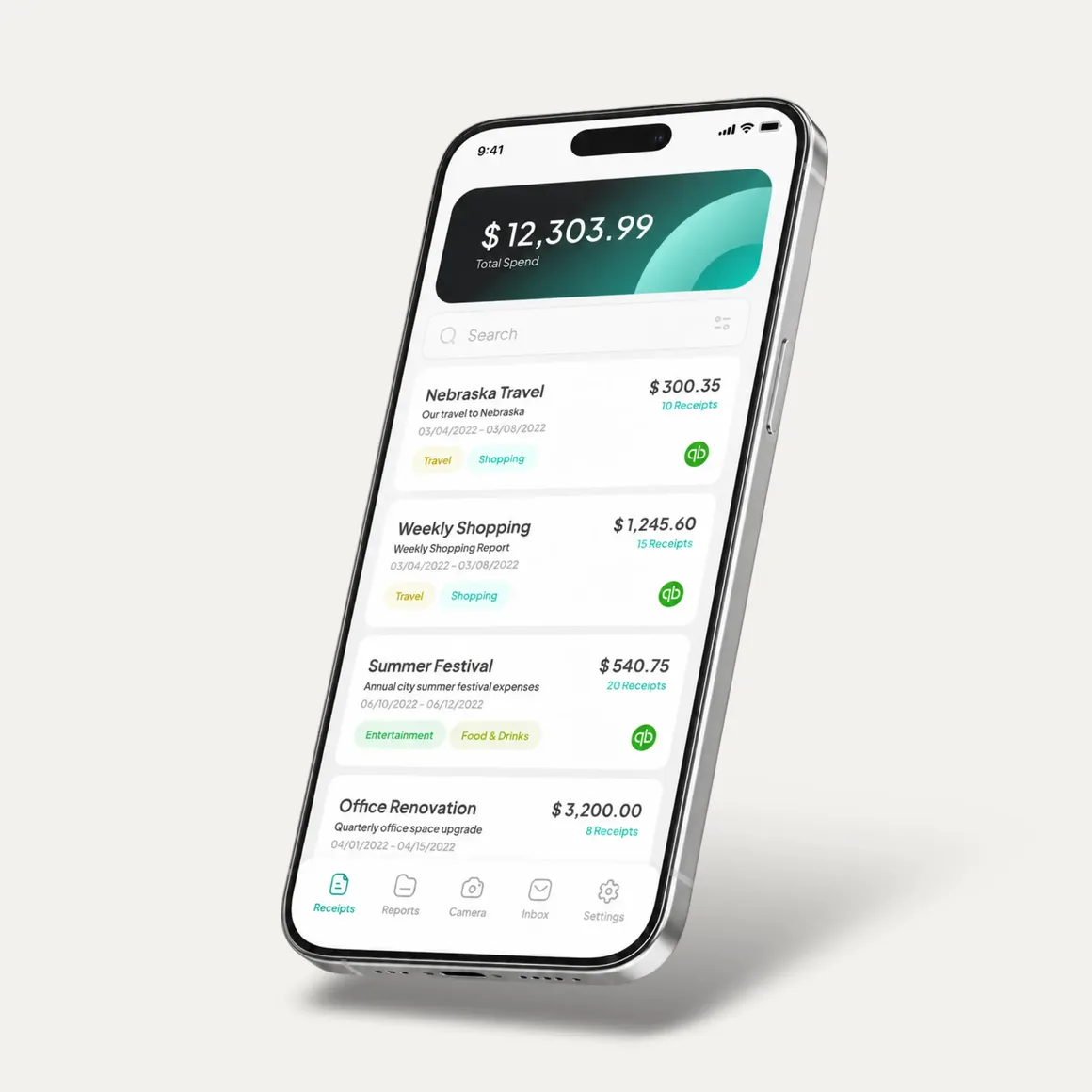
For SaveIT, we rebuilt the NestJS back end, made the two-way QuickBooks Online sync testable against a sandbox, and moved releases to containerized CI/CD.

SaveIT’s receipt recognition now runs on Claude on AWS Bedrock in SaveIT’s own cloud account, chosen with a benchmark harness that tracks accuracy as a number.

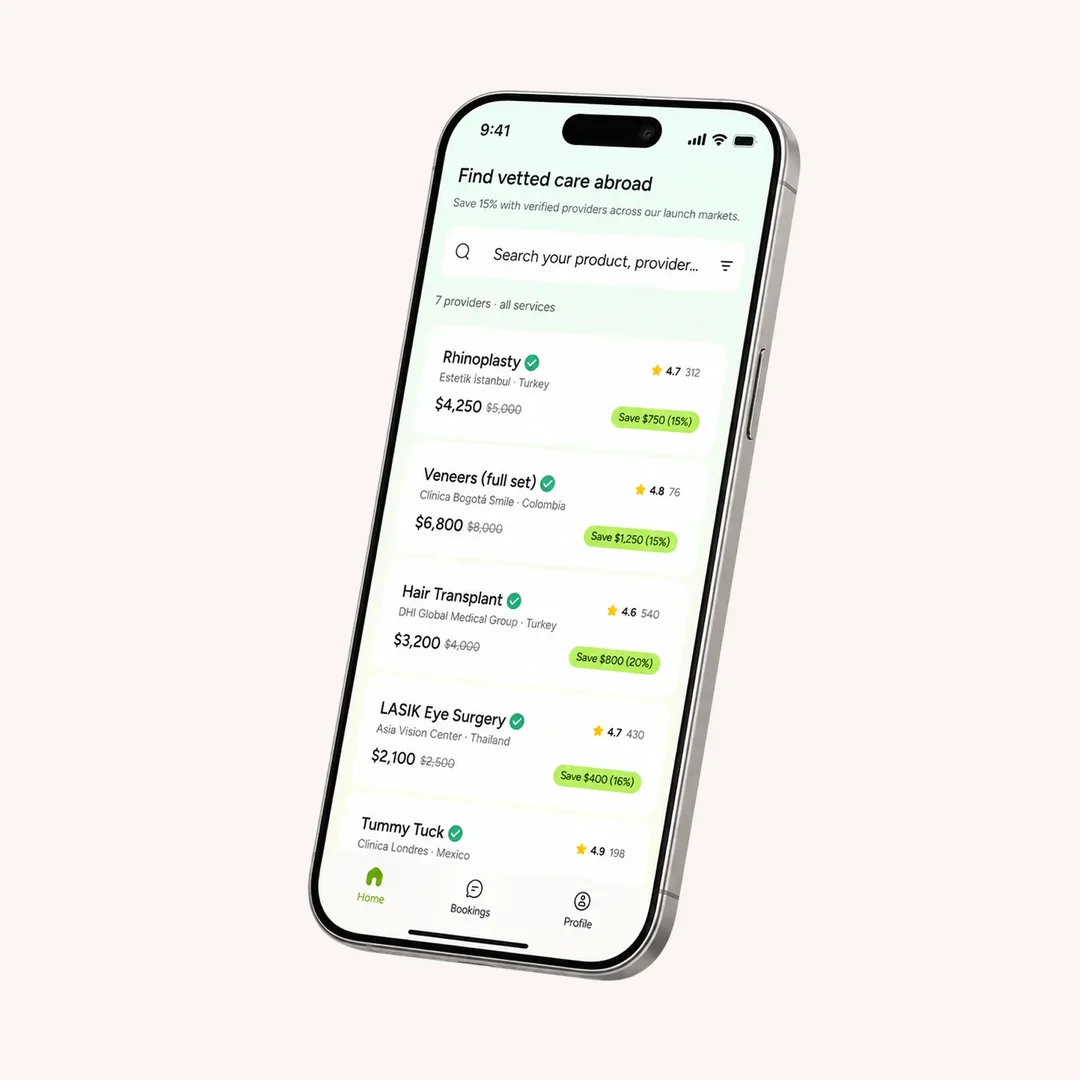
For Happier, one partner covered strategy, mobile, web, back end and cloud, so there were no hand-offs.

ML training belongs in Python, and a Java estate may need a Java service beside it, not a rewrite. We’ll design the Node.js part to sit next to it.
The senior engineer who sets your service boundaries, timeouts and retry rules signs off the release, working Pacific hours from San Jose.

Embedded team · Real estate

Gitcha flips the real-estate model: buyers post what they want, and owners and agents respond. As its embedded engineering team, Diffco refactored the legacy React/Node codebase, modernized the AWS infrastructure and put CI/CD in place, then shipped Version 2 on time.
Two ways to start

One to two weeks. A senior back-end architect, with agents reading the code, infrastructure and logs, returns an event-loop and latency profile of your slowest endpoints, a dependency and CVE map, and an upgrade path to a current LTS.
 Fixed price, agreed up frontEvery finding ranked, with its fix and its effortThe report is yours. Use it with any team, including your own

An agreed API contract in the first weeks, and working endpoints soon after. Senior engineers decide, agents build inside the plan, a person signs off on each flow. Monthly team allocation or a fixed scope after discovery.
Estimate given as a range with its open questionsThe plan, contracts and infra code are yours from week oneHandover with runbooks and a codebase you can readWhat we bring
 Node.js
 TypeScript
 NestJS
 Fastify
 Express
 PostgreSQL
 MySQL
 MongoDB
 Redis
 DynamoDB
 Prisma
 BullMQ
 AWS
 Azure
 Docker
 Terraform
 GitHub Actions
 OpenTelemetry
 Grafana
 Sentry
 Jest
 Vitest
 OpenAI
 Anthropic Claude
 LangChain.js
 pgvector







Explore our
amazing case studies

Because a back end that keeps up as your product grows comes from decisions made before the first request: contracts at every edge, failure handling designed in, an event loop nothing blocks. Senior engineers make those calls; AI agents build inside that plan; a person checks each key flow before release. We’ve done it on new builds, takeovers and rebuilds.
NestJS when a product needs structure across a growing team, Fastify when throughput matters most, Express for small services and existing codebases, and TypeScript throughout. We choose during architecture and write the reason down.
Yes. We start with an audit (runtime and package health, the slowest endpoints, failure handling, test coverage), then stabilize and improve in slices while the service stays live. At Gitcha, working as the embedded team, that meant refactoring key parts of a legacy React and Node.js codebase and modernizing its AWS infrastructure.
By keeping the event loop free and watching it. Heavy work goes to queues and worker threads, every outbound call has a timeout, and event-loop lag and heap size are metrics with alerts. When memory climbs, heap snapshots show which objects are holding it. Load tests run before launch, not after the first spike.
Yes. We scope the upgrade first (deprecated APIs, native modules, packages that block it, test coverage), then move in slices behind the running service. Node.js 26 became Active LTS on 28 October 2026, and 24 is supported until April 2028. If you’re on 20 or older, you’re already off security patches; 22 loses them in April 2027. From Node.js 27 a new major arrives once a year, so we set up checks that make the next upgrade routine.
On Node.js that means a committed lockfile, a dependency scan on every change, install scripts blocked for unvetted packages and secrets kept out of logs. We work with SOC 2-aligned practices, HIPAA- and GDPR-aware delivery, and full IP assignment, and for audited work we design to the controls and keep the evidence as we go.
If the work is mostly I/O (APIs, real-time features, integrations, calls to AI models), usually yes. Non-blocking I/O handles many connections per process, types and validation schemas are shared with your web code (and React Native), and Node.js was the most-used web technology in Stack Overflow’s 2025 survey. Short CPU-bound tasks go to worker threads; ML training and video encoding go to a separate service.
Yes. A monthly allocation of senior Node.js engineers who work in your repo, sprints and review process, directed by your leads, with our platform and a back-end architect behind them.
An audit takes one to two weeks. A new service or a single product area is estimated in discovery, as a range with the open questions that make it wide; larger platforms ship in usable releases, with an agreed API contract in the first weeks.
You do: the code, the API contracts, the infrastructure as code, and the plan, rules and decision log, kept as plain files in your repo from the first commit and yours to take to any team.
Engagements start with a fixed-price audit or discovery, agreed up front. Builds run on a monthly team allocation or a fixed scope after discovery, with the estimate given as a range and the open questions that make it wide.
 React DevelopmentSenior React engineers build fast, accessible front ends: new products, takeovers and React 19 upgrades.
 Vue.js DevelopmentSenior engineers build Vue 3 and Nuxt applications in TypeScript, and take over the ones still running on Vue 2.
 Fintech Software DevelopmentPayments, banking platforms, fund accounting and receipt AI, built where money correctness comes first.
 Vibe Code RescueYour Lovable, Bolt, Replit or Cursor prototype worked. Our senior engineers stabilize, harden or rebuild it for production.
 Next.js DevelopmentSenior engineers build Next.js products that rank, load fast and stay secure, and take over the ones that have outgrown their first architecture.
 iOS App DevelopmentiPhone and iPad apps in Swift and SwiftUI: consumer apps, internal tools for your staff, and apps that talk to hardware. We also take over existing apps.
 Web DevelopmentModern websites and web apps engineered by senior teams directing AI agents.
 AI & ML DevelopmentML, RAG, computer vision, and copilots, engineered to production standards with Production-Ready AI Engineering.
 Custom Software DevelopmentWeb apps, platforms, and internal tools, built in weeks instead of months, from PoC to production.

333 W San Carlos St Suite 600, San Jose, CA, USA, 95110